
Remember 2019? When webinars were the awkward stepchild of the marketing family—reliable but unremarkable, functional but forgettable. Fast-forward five years, and we’re living in a completely different reality. What started as a desperate scramble to maintain business continuity during lockdowns has evolved into one of the most sophisticated and effective channels in the B2B marketing arsenal.
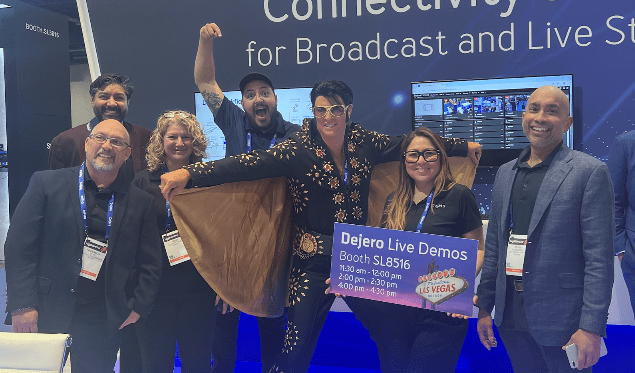
As someone who’s orchestrated countless events—from intimate executive roundtables to massive industry showcases like our recent livestream demonstrations at NAB 2025—I’ve witnessed this transformation firsthand. And frankly, the companies still treating webinars like glorified PowerPoint presentations are leaving serious money on the table.
→ Register for AI-Powered Wildfire Defense 🚀 webinar, June 18
The Great Webinar Awakening
Let’s be honest: March 2020 turned us all into amateur broadcast producers overnight. Those early pandemic webinars were… let’s call them “charmingly authentic.” Frozen screens, muted hosts asking “can you hear me now?” and that one participant who somehow always forgot to turn off their camera while eating lunch–we’ve all been there!
But here’s what happened next that most people missed: while everyone was complaining about Zoom fatigue, marketers were quietly reverse-engineering what worked. They noticed that 73% of B2B marketers say webinars are among the best ways to generate high-quality leads. More importantly, they realized that 75% of marketers directly link webinars to increased revenue and lower cost per lead.
The math became impossible to ignore. On average, B2B marketers generate 500 – 1000 leads per webinar, and here’s the kicker: 2-5% of webinar attendees will purchase the offer at the end of a webinar. When you’re dealing with enterprise B2B sales cycles, those numbers represent serious revenue potential.
From Survival Mode to Strategic Weapon
The evolution didn’t happen overnight, but it was dramatic. We went from treating webinars as a necessary evil to recognizing them as a premium engagement channel. The companies that figured this out early—ourselves included—started seeing webinars not just as lead generators, but as relationship accelerators.
Our upcoming AI-powered wildfire defense webinar on June 18 perfectly illustrates this shift. Instead of a traditional product demo, we created a high-stakes, real-world scenario that resonated with public safety professionals dealing with actual emergencies.
This wasn’t luck. It was a strategic design based on understanding that 64% of survey participants agree that the quality of speakers and relevance of content encourages them to sign up for events.
The Anatomy of Modern Webinar Excellence
Let me break this down further.
Dynamic Content: Gone are the days when you could throw together a slide deck and call it content strategy. Today’s webinar audiences—54% of B2B professionals watch webinars on a weekly basis—have sophisticated expectations. They want actionable insights, exclusive data, and real-world applications they can implement immediately.
38% of attendees voted that the content was the most important reason they attended, which means your topic selection isn’t just important—it’s everything. The webinars that generate the highest-quality leads focus on solving specific, urgent problems rather than showcasing product features.
Live vs. Recorded Debate: Yes, recorded webinars scale better. But 75% of marketers prefer to host live webinars and the immediate engagement is the main reason. The live factor creates urgency, enables real-time Q&A, and builds authentic connections that recorded sessions simply cannot replicate.
During our recent Nevada-based webinar, the live format allowed us to address specific regional concerns about critical communications—something that would have been impossible with pre-recorded content.
Valuable Interactive Elements: 62% of marketers plan for the interactivity within the webinars. Polls that ask “Where are you joining from?” or Q&A sessions that feel like afterthoughts don’t move the needle. Webinar hosts who use interactive elements to gather qualifying information and demonstrate their platform’s capabilities simultaneously get ahead further.
54% of marketers utilize this data with their sales departments—and this is where the magic happens. Every poll response, every chat message, every question becomes sales intelligence that informs your follow-up strategy.
From Las Vegas to California: Lessons in Integrated Marketing
Our experience at NAB 2025 reinforced something crucial: webinars work best as part of an integrated marketing approach, not as standalone events. The connections we made on the show floor, the conversations that started in our booth, and the relationships we built through one-on-one meetings all fed into our webinar strategy.
This is where many companies stumble. They treat webinars as isolated campaigns rather than touchpoints in a comprehensive engagement ecosystem. Our upcoming June 18 webinar with Microsoft isn’t just about the content we’ll deliver that day—it’s about the months of relationship-building that preceded it and the months of nurturing that will follow.
The Five Pillars of Webinar Success in 2025
- Audience-First Content Strategy: Your content should answer one question: “What keeps my ideal prospects awake at night?” If you’re not addressing genuine pain points with actionable solutions, you’re just creating expensive entertainment.
- Multi-Touch Integration: Webinars aren’t standalone events—they’re centrepieces in a multi-channel campaign that includes email sequences, social media amplification, and sales team coordination.
- Real-Time Qualification: Use interactive elements to identify hot prospects during the webinar, not after. The most engaged participants should be flagged for immediate sales follow-up.
- Value-First Approach: The best webinars give away genuinely valuable insights. Counterintuitively, the more value you provide upfront, the more likely prospects are to engage with your sales process.
- Data-Driven Optimization: 52% of marketers measure basic attendance numbers (number of registrants and attendees), but it’s best to focus first on engagement metrics
The Future of Webinar Marketing
As we look ahead, several trends are reshaping the webinar landscape:
- AI-Powered Personalization: Dynamic content that adapts based on audience engagement and behaviour patterns.
- Hybrid Event Integration: Seamless connections between in-person events like NAB and digital follow-up webinars.
- Interactive Technologies: Beyond polls and Q&A to include virtual whiteboards, breakout rooms, and gamified experiences.
- Revenue Attribution: Deploy a sophisticated tracking that connects webinar engagement to closed deals.
Webinars aren’t just another channel—they’re often the highest-converting channel in your entire marketing mix when executed properly. The webinar and webcast market size is anticipated to reach USD 4.44 billion by 2025, and that growth is being driven by results, not hype.
As we prepare for our June 18 collaboration with Microsoft, we’re not just planning a webinar—we’re architecting an experience.
Don’t Wait Until Disaster Strikes
The next California wildfire won’t wait for infrastructure upgrades. Will your emergency communications be ready? 🚀 REGISTER NOW “AI-Powered Wildfire Defense: Where others go dark, you stay connected,” June 18 at 11:00am PST | 2:00pm EST.





 CUERVOmedia
Leave a comment