
If you know me, you know I’m a lover of present-tense visual writing.
It’s the kind of language that doesn’t just inform, it transports. You don’t read it so much as see it. And when it’s done well, it stays with you long after the words have ended.
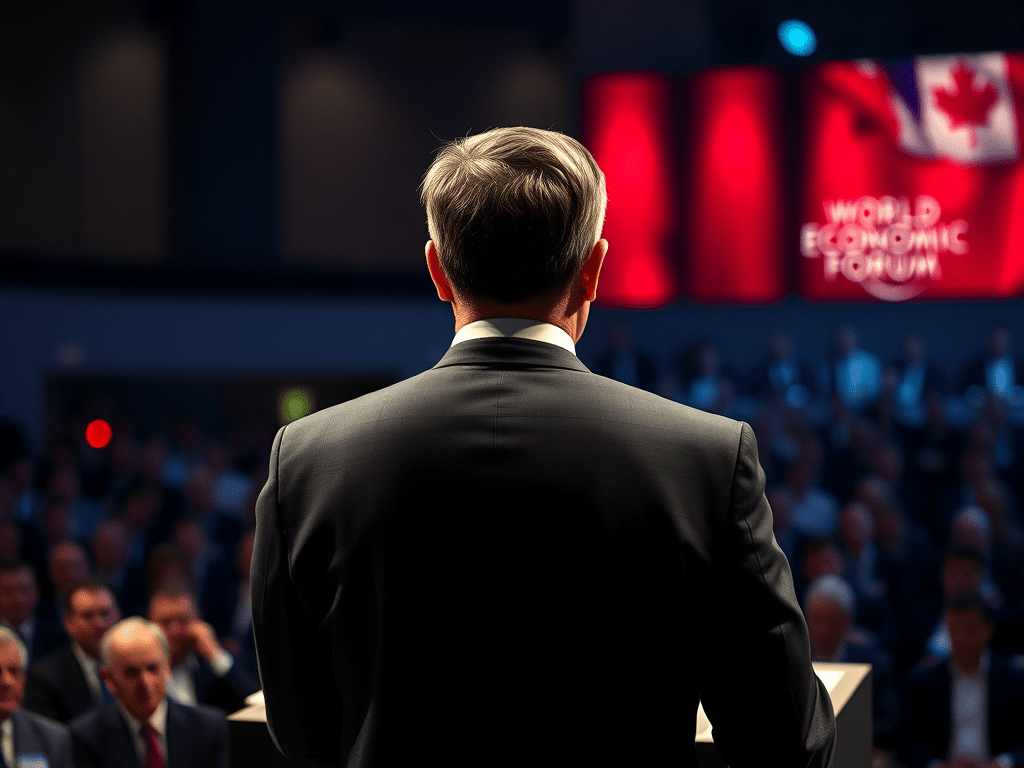
I recently came across a masterclass in this style: Canadian Prime Minister Mark Carney’s speech at the World Economic Forum in Davos. Politics aside, the craftsmanship of his language deserves attention from anyone who communicates for a living.
What Makes Visual Writing Work
The speech is built on images, not abstractions:
A world of fortresses: You can see the walls going up. The isolation. The turning inward.
Economic integration as weapons: Trade isn’t neutral anymore. It’s ammunition.
If we’re not at the table, we’re on the menu: Visceral. Urgent. Impossible to forget.
Taking the sign out of the window: A callback to Václav Havel’s greengrocer who displayed a sign he didn’t believe in just to get along. The image of removing that sign becomes an act of honesty, of choosing truth over compliance.
These aren’t policy points dressed up in metaphor. They’re the policy points as images. The concepts and the visuals are inseparable.
Why This Matters for Communicators
We live in an attention economy where everyone is scanning, skimming, scrolling. Abstract language, no matter how accurate, slides right past.
But images stick.
When you write “supply chain vulnerabilities” people understand it intellectually. When you write “a country that cannot feed itself, fuel itself, or defend itself has few options,” they feel it in their gut.
The best communicators understand this instinctively. They don’t tell you what to think. They paint pictures and let you arrive there yourself.
The Technique Behind the Craft
Present-tense visual writing follows a few principles:
Concrete over abstract: Not “economic interdependence creates risk” but “integration becomes the source of your subordination.”
Active over passive: Not “tariffs are being used” but “great powers have begun using economic integration as weapons.”
Sensory over conceptual: Not “strategic autonomy” but “the ability to withstand pressure.” My favourite line.
Familiar images, fresh context: The greengrocer’s sign. The fortress. The table and the menu. These are images we already know, deployed in ways that make us see something new.
The Takeaway
Whether you’re writing a brand narrative, a keynote, a proposal, or a LinkedIn post, ask yourself: can they see it?
If the answer is no, you’re not done yet.
The powerful have their power. But communicators have something too: the ability to make the invisible visible, to turn ideas into images that move people to think, feel, and act.
That’s the craft. And it’s worth pursuing.

 CUERVOmedia
Leave a comment