
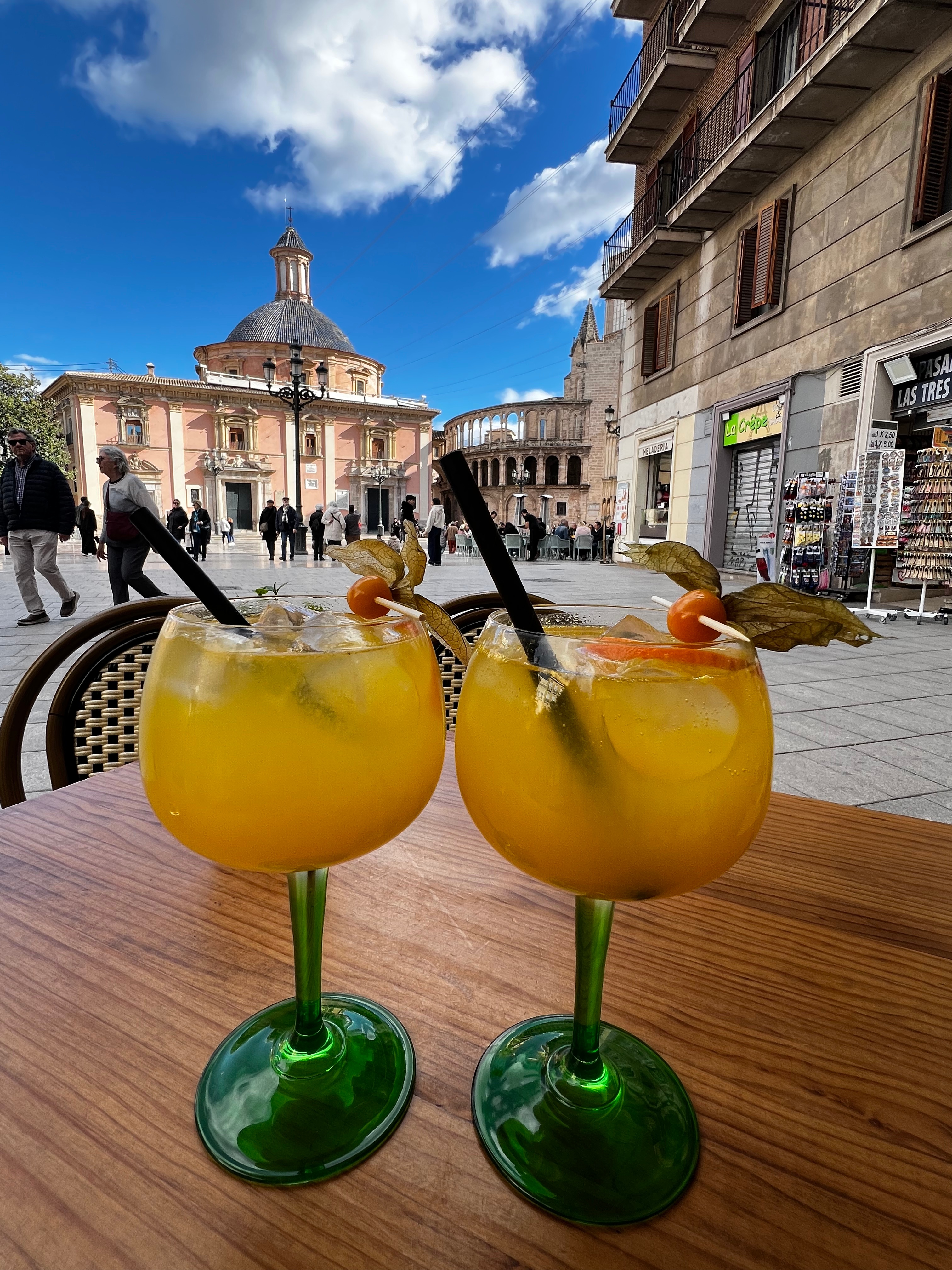
I was six hours ahead in Spain when Bad Bunny took the Super Bowl halftime stage. I didn’t get to watch it live with the rest of the world. But when I woke up the next morning in Valencia and pressed play, I haven’t been able to stop thinking about it since.
And a month later? I’m still thinking about it. Because the story didn’t end when the confetti fell.
This wasn’t just a performance. It was a mirror.
The big family parties. The kids staying up past midnight and falling asleep on chairs. The music that lives in your bones before you even know the words. The joy. The love. The pride. All of it, right there on the biggest stage in American entertainment.
Maya Angelou once said that people will forget what you said, but they’ll never forget how you made them feel. That is exactly why this performance will go down in history, and why the numbers keep proving it.
The records speak for themselves
On YouTube alone, the performance surpassed 48 million views in its first 24 hours, a platform record for a Super Bowl halftime show, breaking the previous benchmark held by Shakira and Jennifer Lopez and, among solo headliners, surpassing the 24-hour record set by Rihanna in 2023.
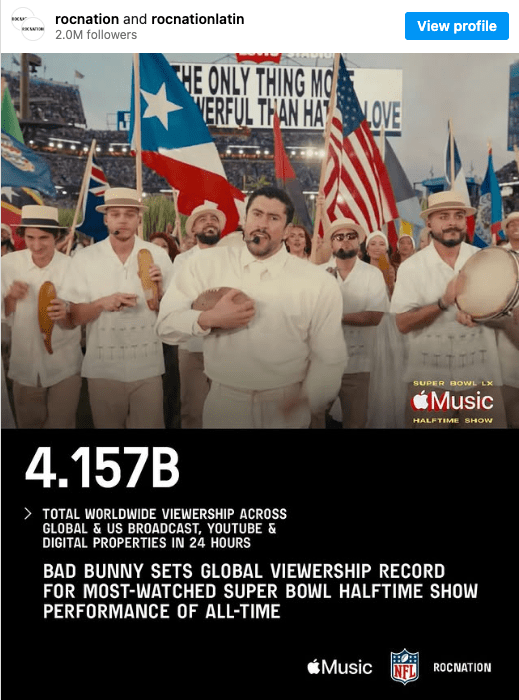
The NFL’s top three most-viewed social posts of all time now all come from the Bad Bunny halftime show. One clip, “Only Thing More Powerful Than Hate Is Love,” reached 179 million views on Instagram, making it the most-viewed clip on NFL social media ever.
Over 55% of all social views came from international markets , a reminder that this performance didn’t just belong to one country. It belonged to the world.
Telemundo averaged 3.3 million viewers for the Super Bowl broadcast, making it the most-watched Super Bowl Spanish-language broadcast in U.S. history, and the audience peaked during the halftime show itself, with 4.8 million viewers tuning in, making it the most-watched Super Bowl halftime in Spanish-language history.
And the music didn’t stop there. “DtMF” jumped to number one on the Hot 100, becoming just the fourth all-or-mostly Spanish song to top the chart and Bad Bunny’s first solo number one single, with 43 million streams and a 262% surge in digital downloads.
Debí Tirar Más Fotos returned to number one on the Billboard 200, a chart it had already topped earlier, making the 41-week span between its weeks at number one the longest such gap in years.
And then came the Grammys
One week before the Super Bowl, Bad Bunny stood on another stage. Debí Tirar Más Fotos became the first Spanish-language album to win Album of the Year at the Grammys, and also the first album to win Album of the Year at both the Grammys and the Latin Grammys.
In the 24 hours following that win, streams on the album increased 240% compared to the prior Monday, bringing in more than 16 million on-demand streams in the U.S. alone, part of a total 36 million streams Bad Bunny generated that day, a 117% boost.
Grammy week and Super Bowl week, back to back. The cultural avalanche was unlike anything we’ve seen.
The world is still watching
One month later, the momentum hasn’t stopped. Bad Bunny is now mid-way through the global leg of his Debí Tirar Más Fotos World Tour, which he kicked off in November 2025. After wrapping a two-night stand in Sydney, Australia, and a stop in Tokyo, he heads into a full European run that kicks off in late May and runs through late July 2026.
This isn’t a moment. It’s a movement still unfolding in real time.
What I saw on that stage
Bad Bunny didn’t just perform, he told a story. Seamlessly. Authentically. He celebrated the artists who came before him. He sampled the songs I grew up listening to. He brought legends to that stage and reminded the world where this music comes from and who it belongs to.
And then I started watching the reaction videos.
Every single one is the same beautiful arc: joy to disbelief to full-on tears. Because when you see yourself celebrated like that, something breaks open inside you. Something that says: we belong here. We always have.
As someone born in Peru and raised in Canada, this performance cracked me open in a way I wasn’t prepared for. Because in Latin America, we dance for everything, celebrations and even funerals.
When my maternal grandfather died over 30 years ago, I remember staying up way past 2 a.m. listening to salsa music, eating Peruvian food, drinking chocolate caliente. My grandmother and mis tías asking every person who walked through the door if they were hungry and then starting another round of cooking in their mourning hours, sopita de pollo para revivir. Because even in grief, we feed each other. Even when we don’t have much, we have each other.
That’s what I saw on that stage. That’s what Bad Bunny gave the world.
I’ve watched his performance dozens of times now. On YouTube. On TikTok. And every single time, I feel everything all over again.
When he set out to record Debí Tirar Más Fotos, Bad Bunny told Billboard, “I thought I’m going to make an album from Puerto Rico, for Puerto Ricans.” It never occurred to him that the work would transcend and resonate so strongly beyond the island.
That’s the thing about authentic storytelling. You make it for your people, and somehow it reaches everyone.
Story originally published on LinkedIn.


 CUERVOmedia
Leave a comment